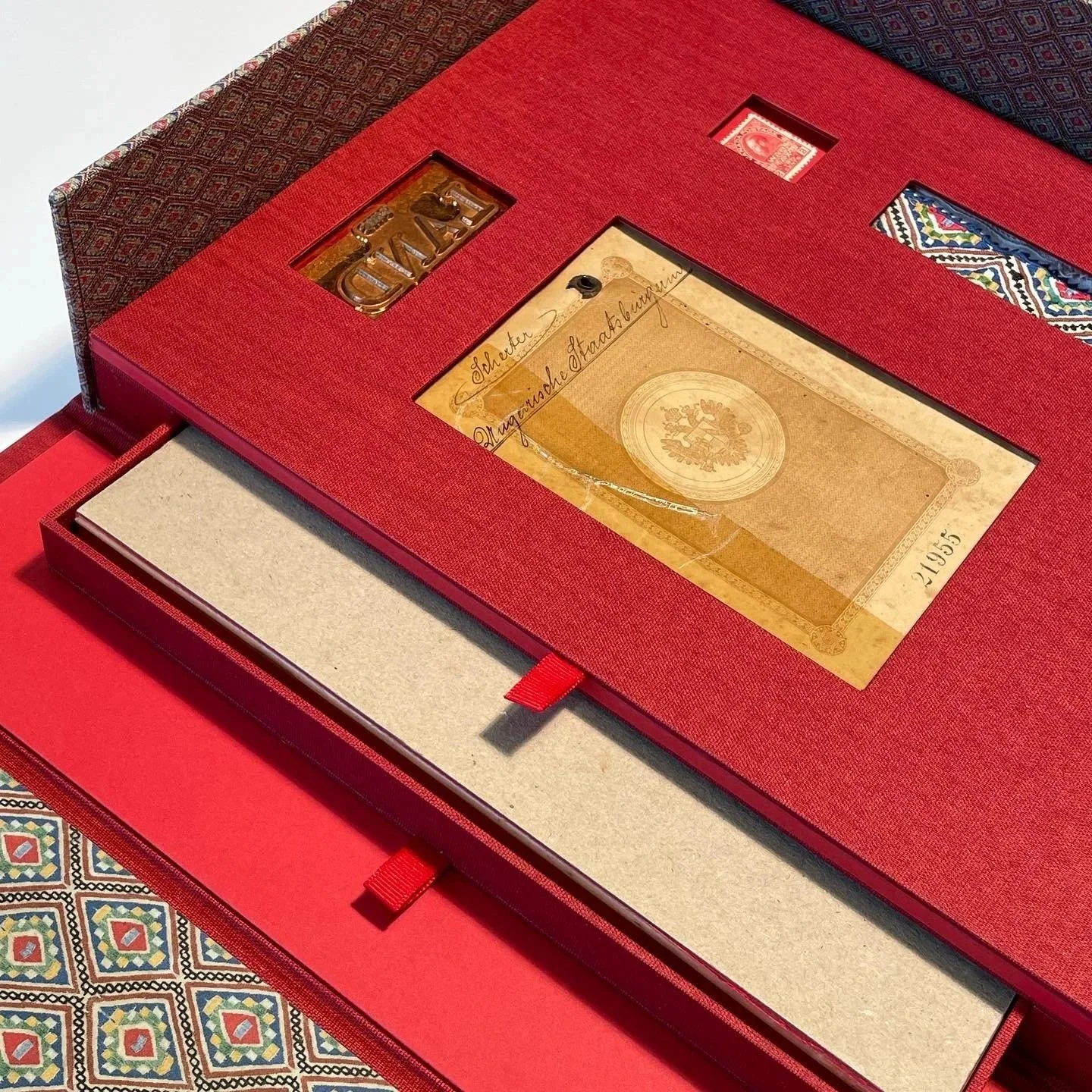
Artist's books are central to Lesia Maruschak's practice. Conceived as autonomous and performative works, they bring together photography, archival research, typography, and material processes to investigate how memory, language, and cultural identity are preserved, contested, and transmitted.
Produced as highly limited editions, the completed works are placed in museums, research libraries, and special collections, where they support ongoing scholarship, exhibition, and public engagement.
Select a title to view the book and related materials.
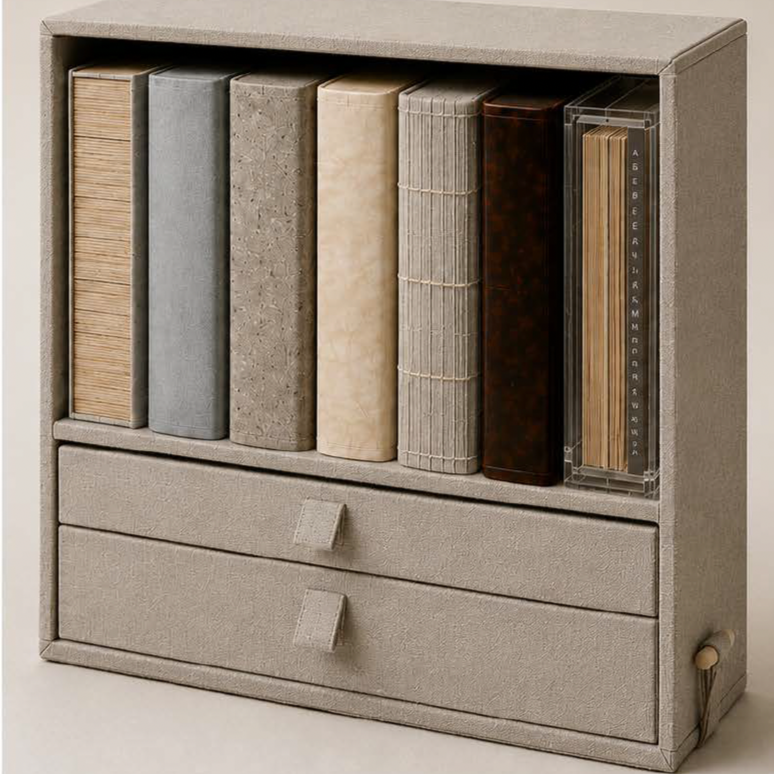
REGISTER
Artist Book (forthcoming) | 2026–2027
An artist book exploring the Ukrainian alphabet as a system of memory, identity, and cultural continuity. The work operates through archival materials, historical letterforms, and systems of classification.
Conceived as a sculptural object examining language as cultural infrastructure. Created with decommissioned Ukrainian library catalogue cards and Ruthenian lead type.
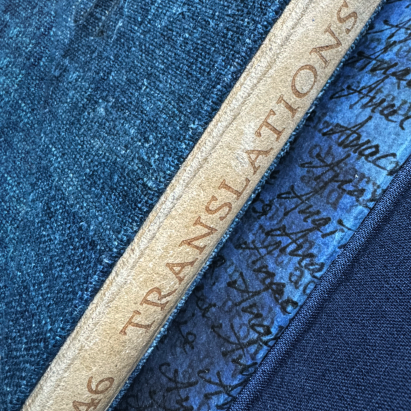
Artist book | multi-part work | 2026
A testimony-based artist book translating accounts by Ukrainian children rescued from Russian captivity. The work operates through poetic condensation, typographic intervention, and archival process.
Conceived as a performative object and intended for long-term institutional stewardship. Initial release of Vol. 1 presented at CODEX 2026.
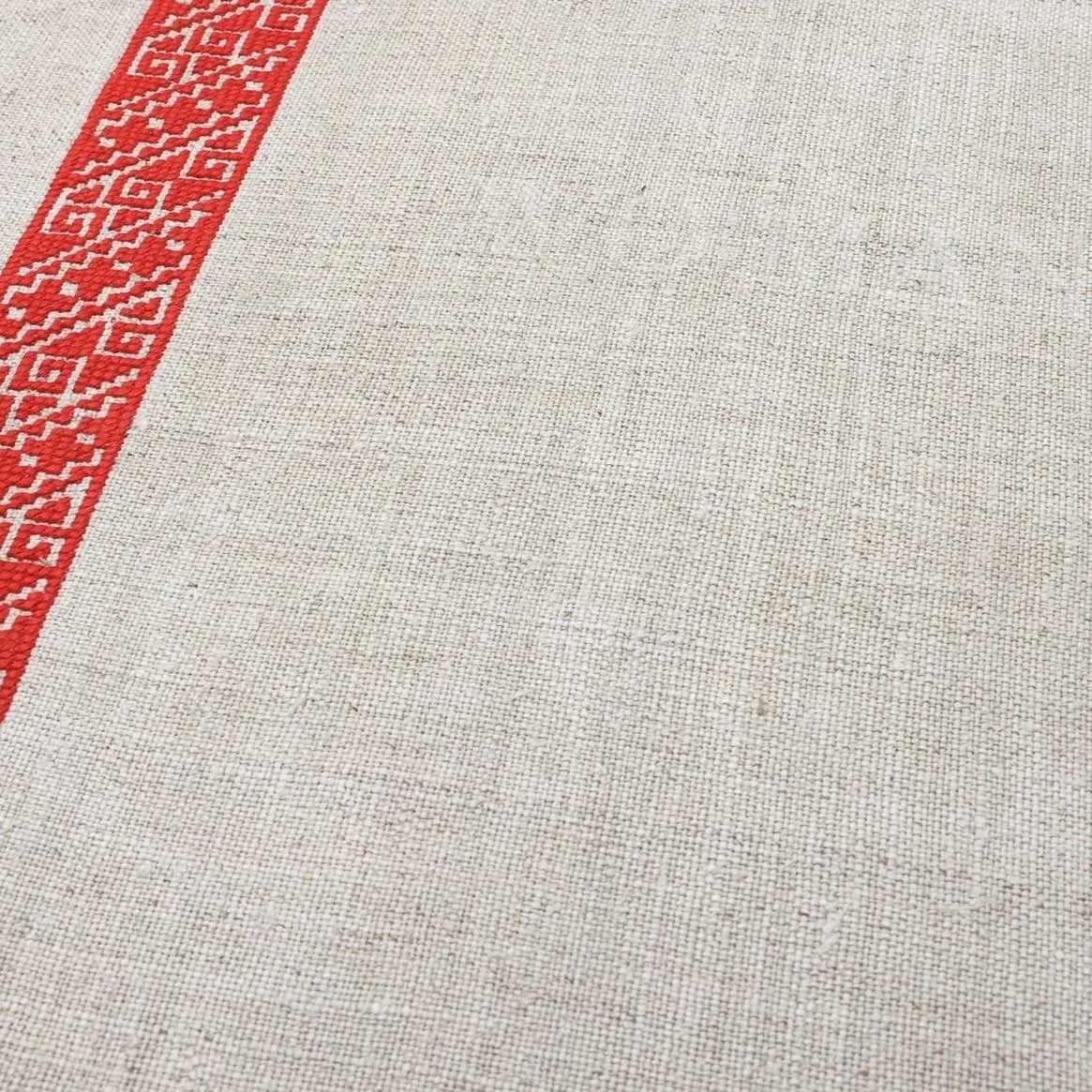
Artist book | First issued 2019 · Revised edition 2025
Anchored by an embroidered Ukrainian vyshyvanka, this artist book traces inheritance, gendered labour, and cultural survival. The 2025 edition is fully re-sequenced and materially reworked in response to shifting historical context.
Conceived as a performative object and intended for long-term institutional stewardship.
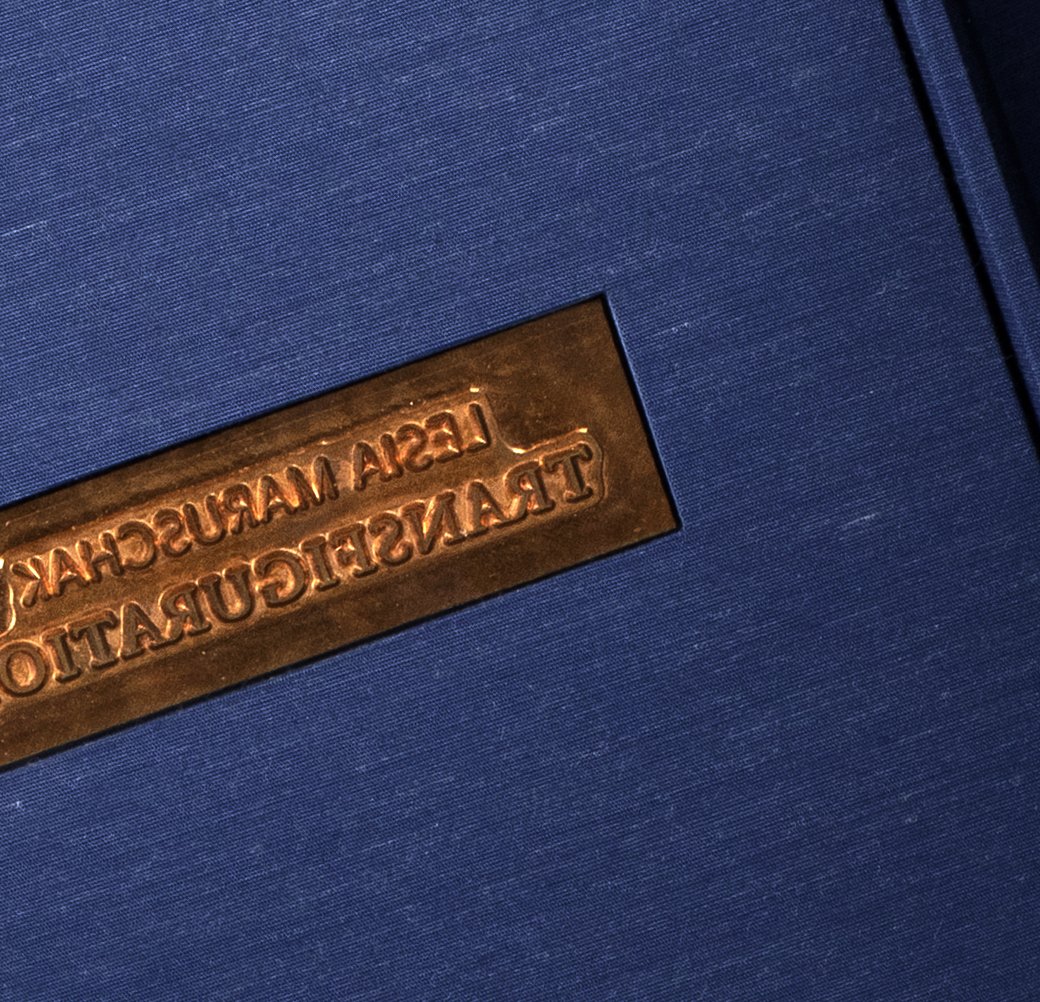
TRANSFIGURATION — Folio
Folio | 2024
A folio extending TRANSFIGURATION into a portfolio format. The work foregrounds individual images and material presence for exhibition, teaching, and special-collections contexts.
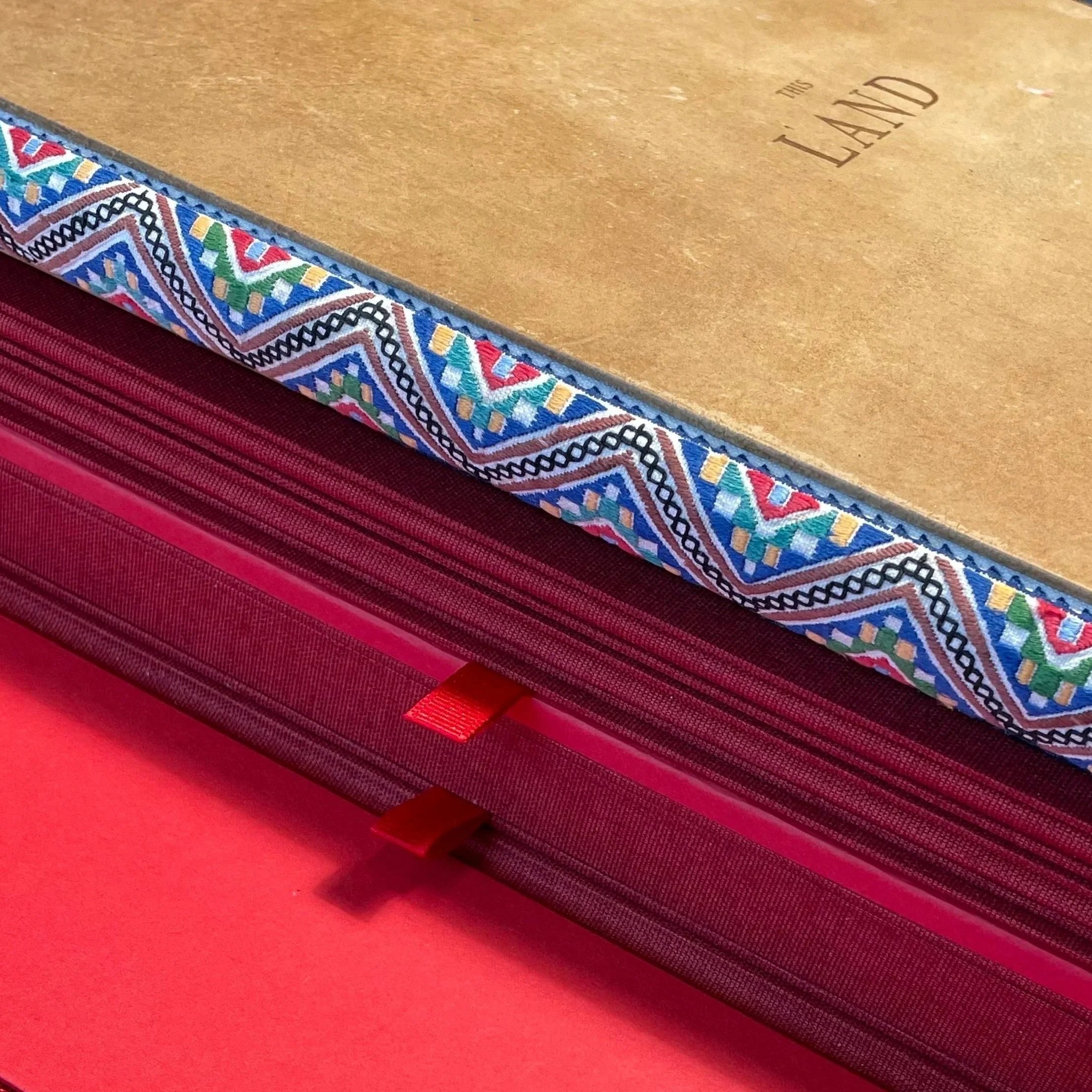
Artist book | 2022
Artist book confronting the internment of Ukrainians in Canada through archival fragments and photographic sequence. The work unfolds through accumulation, absence, and material restraint.
Conceived as a performative object and intended for long-term institutional stewardship.
Artist book | 2019
Centred on the testimony of Maria, a survivor of the 1932–33 famine-genocide in Soviet Ukraine. The book moves through photographic sequencing and erasure to hold conditions of famine, survival, and historical disappearance.
Images function as presences rather than illustration.