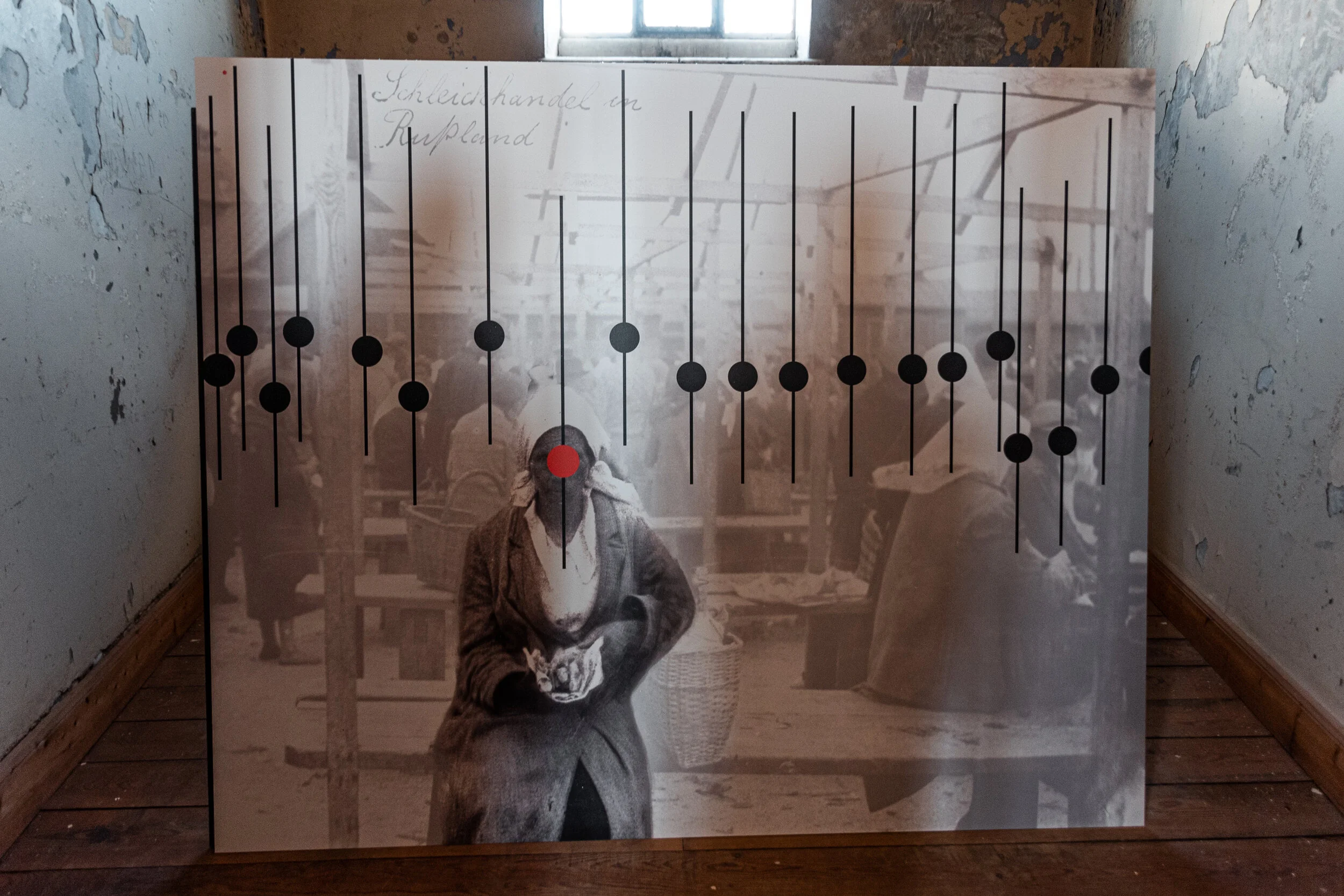
Project MARIA is a mobile memorial responding to the Holodomor—the 1932–33 state-engineered famine in Soviet Ukraine—and to the long-standing erasure of this genocide from broader historical awareness.
The work emerged from research into how violence is sustained through disinformation, denial, and the suppression of memory—mechanisms normalized during the Stalinist period and reactivated in Russia’s ongoing war against Ukraine. Rather than adopting the fixed, monumental language of traditional memorials, Project MARIA takes the form of a mobile, participatory work that moves across locations and cultural contexts.
The project resists authoritative narration. Drawing on historical photographs and the materiality of photographic processes, it invites viewers to encounter the memorial through proximity, attention, and participation. Meaning is not prescribed, but assembled—through individual passage and collective presence.
-
The work is realized through site-responsive installations and photographic works presented across institutional and public contexts.
-
Works from Project MARIA are held in public and institutional collections, including the National Holodomor Genocide Museum, Kyiv.
-
Selected presentations include:
National Holodomor Genocide Museum, Kyiv, 2021
Landskrona Foto Festival, Sweden, 2020
White Shadows, Turchin Center for the Visual Arts, Boone, 2020 -
Transfiguration, artist book, Terra Ercolano Press, 2018

